
“Informed By Science”

Tag: tennis

  • Behaviour Change and Nutrition: The Key to Consistency

    Whether you’re aiming to build muscle, lose fat, or enhance performance, your nutrition habits are just as important as your training program. But sticking to a diet plan whether it’s a bulking phase, a cutting cycle, or performance nutrition can be harder than hitting a heavy squat. The real challenge isn’t knowing what to eat; it’s changing your behaviour to make it happen consistently.

    This is where behaviour change science comes in. Grounded in psychology, behaviour change strategies can help gym goers, athletes and well honestly, anyone! overcome common barriers like poor planning, low motivation, and decision fatigue turning good intentions into real results.

    Why Motivation Alone Isn’t Enough

    You might start a new meal plan feeling motivated and ready. But motivation fluctuates. To stay consistent long-term, you need more than willpower you need systems and strategies.

    According to the COM-B model, behaviour is driven by three things: Capability, Opportunity, and Motivation (Michie et al., 2011). In a gym context, this might look like:

    Capability: Do you have the cooking skills and nutrition knowledge? Opportunity: Is your environment helping or hindering your eating goals? Motivation: Are you clear on why you’re doing this?

    Addressing all three areas sets you up for long-term adherence not just short-term compliance.

    Habit Formation and Meal Consistency

    For athletes and recreational lifters, habit formation is key. The Health Action Process Approach (HAPA) highlights the difference between intention and action. You might plan to prep meals or hit your macros but without planning, tracking, and adjusting, those intentions often fall flat (Schwarzer, 2008).

    Using tools like MyFitnessPal (or other apps), food scales, and prep routines helps build consistency. Research shows that self-monitoring—tracking what you eat—is one of the most powerful predictors of success in fat loss and muscle gain (Chen et al., 2023).

    Digital Tools for Diet Adherence

    A 2023 meta-analysis confirmed that using nutrition tracking apps significantly improves dietary behaviours and outcomes in people aiming to lose fat or gain lean mass (Chen et al., 2023). These tools don’t just count calories they give real-time feedback, help you spot trends, and reinforce accountability.

    Other behaviour change techniques (BCTs) proven to support gym-related goals include:

    SMART goal-setting (Specific, Measurable, Achievable, Relevant, Time-bound)

    If then planning (e.g., “If I get hungry post-workout, then I’ll have a protein shake”)

    Social support (training partners or online communities)

    Why Most Meal Plans Fail (And How to Fix It)

    Many people fall off their meal plans not because they’re “lazy” or “undisciplined,” but because their approach doesn’t match their lifestyle or values. According to the Theory of Planned Behaviour (TPB), intentions alone aren’t enough people must also believe they have control over their environment and the ability to follow through (Ajzen, 1991).

    That’s why environmental restructuring like prepping meals in advance, keeping snacks out of sight, or having protein options ready post-training is critical. Your environment should make the right choice the easy choice.

    The Bigger Picture: Stress, Sleep, and Social Support

    Behaviour change science also reminds us that diet doesn’t happen in isolation. Poor sleep, stress, or a lack of social support can derail even the best plan. The Science of Behavior Change (SOBC) program by NIH highlights how self-regulation, stress management, and habit loops can be modified to enhance results (NIH, 2023).

    In other words, you don’t need to grind harder you need to train smarter, eat smarter, and structure your environment and mindset for success.

    Conclusion

    If you’ve ever struggled to stay consistent with your nutrition while training hard, you’re not alone and you’re not lacking discipline. You’re just missing the behaviour change strategies that align your habits with your goals.

    By applying science-based models like COM-B, HAPA, and TPB, and using tools like tracking apps, habit systems, and structured planning, you can finally bridge the gap between training and nutrition and unlock your full potential in the gym.

    References

    Ajzen, I., 1991. The theory of planned behavior. Organizational Behavior and Human Decision Processes, 50(2), pp.179–211.

    Chen, J., Cade, J.E. and Allman-Farinelli, M., 2023. The effectiveness of nutrition apps in improving dietary behaviours and health outcomes: a systematic review and meta-analysis. Public Health Nutrition, 26(1), pp.1–12.

    Greaves, C.J., Sheppard, K.E., Abraham, C., Hardeman, W., Roden, M., Evans, P.H. and Schwarz, P., 2011. Systematic review of reviews of intervention components associated with increased effectiveness in dietary and physical activity interventions. BMC Public Health, 11(1), p.119.

    Lee, R.M., Fischer, C., Caballero, P., and Andersson, E., 2022. Behaviour change nutrition interventions and their effectiveness: a systematic review of global public health outcomes. PLOS Global Public Health, 2(9), p.e0000401.

    Michie, S., Atkins, L., and West, R., 2014. The Behaviour Change Wheel: A Guide to Designing Interventions. London: Silverback Publishing.

    Michie, S., van Stralen, M.M. and West, R., 2011. The behaviour change wheel: A new method for characterising and designing behaviour change interventions. Implementation Science, 6(1), p.42.

    NIH Common Fund, 2023. Science of Behavior Change (SOBC). [online] Available at: https://commonfund.nih.gov/science-behavior-change-sobc [Accessed 18 May 2025].

    Schwarzer, R., 2008. Modeling health behavior change: How to predict and modify the adoption and maintenance of health behaviors. Applied Psychology, 57(1), pp.1–29.

  • Understand HMB, Benefits, Mechanisms and Safety

    A former athlete I worked with popped up the other day asking if he should start taking HMB to increase muscle mass. I wish I could have given him a straight yes or no but generally if your aim is to lose body fat then HMB may help with preserving lean tissue. However, research is far from definitive in support of its efficacy.

    Beta-hydroxy-beta-methylbutyrate (HMB) is a metabolite of the essential amino acid leucine, recognized for its potential to enhance muscle health and performance. I will attempt to delve into the current scientific understanding of HMB, exploring its benefits, mechanisms of action, and safety profile.

    Benefits of HMB Supplementation

    1. Muscle Mass and Strength Enhancement

    Research indicates that HMB supplementation can lead to significant improvements in muscle mass and strength. An umbrella review of meta-analyses by Bideshki et al. (2025) found that HMB supplementation resulted in increases in fat-free mass and muscle strength index. These findings suggest that HMB can be particularly beneficial for individuals experiencing muscle atrophy due to various physiological conditions. 

    2. Attenuation of Muscle Loss in Clinical Conditions

    Loss of skeletal muscle mass and muscle weakness are common in various clinical conditions, leading to impaired physical function. A systematic review and meta-analysis by Rowlands et al. (2019) involving 2,137 patients demonstrated that HMB supplementation increased muscle mass and strength, although the effect sizes were small. This suggests that HMB could be a valuable nutritional intervention for preserving muscle health in clinical populations and athletic populations.

    3. Reduction of Exercise-Induced Muscle Damage

    HMB has been shown to reduce muscle damage associated with intense physical activity, thereby accelerating recovery. The International Society of Sports Nutrition’s position stand, as outlined by Wilson et al. (2013), highlights that HMB supplementation decreases post-exercise muscle damage and enhances recovery, making it beneficial across various sports disciplines, regardless of age or sex.  

    Mechanisms of Action

    The anabolic effects of HMB are primarily attributed to its role in protein metabolism. HMB stimulates protein synthesis while attenuating protein degradation in skeletal muscle, potentially leading to muscle hypertrophy and improved strength. Additionally, HMB supplementation has been associated with reductions in total cholesterol, LDL cholesterol, and systolic blood pressure, suggesting potential cardiovascular benefits

    Safety and Dosage

    HMB supplementation is generally considered safe for consumption. The International Society of Sports Nutrition’s position stand by Wilson et al. (2013) reports that a daily intake of 3g per day is well-tolerated without adverse effects on tissue health and function. However, individuals may experience mild gastrointestinal issues, and it is advisable to consult an SENr/AfN registered Nutritionist before starting any new supplement regimen. The combination of HMB with other supplements, such as vitamin D, creatine has also been explored for potential synergistic effects on muscle health, highlighting some positive results.

    Before you decide if HMB is worth adding to your nutrition strategy ask yourself, am I getting the fundamentals right? I.e consuming enough high quality protein, fuelling your training correctly, recovering efficiently? If you answer no to any one of those then HMB may not be for you until you address the fundamental gaps.

    Conclusion

    HMB emerges as a promising supplement for enhancing muscle mass, strength, and recovery, particularly in populations susceptible to muscle loss, such as older adults and those undergoing intense physical training. Its safety profile and potential additional benefits, including cardiovascular improvements, make it a valuable consideration for individuals aiming to optimize muscle health providing the fundamentals (Timing, Type, Total Amount) are maximised. As with any supplement, it is essential to consult with a SENr/AfN registered nutritionist to tailor interventions to individual health needs, conditions and trained status.

    References

    1. Bideshki, A., Bagheri, R., Rashidlamir, A., Motevalli, M. S., & Wong, A. (2025). Ergogenic Benefits of β-Hydroxy-β-Methyl Butyrate (HMB) Supplementation on Body Composition and Muscle Strength: An Umbrella Review of Meta-Analyses. Journal of Cachexia, Sarcopenia and Muscle, 16(2), 123-135. 

    2. Rowlands, D. S., Thomson, J. S., Timmons, B. W., Raymond, F., Fuerholz, A., Mansourian, R., Zwahlen, R., Metairon, S., Glover, E., & Tarnopolsky, M. A. (2019). β-Hydroxy-β-methylbutyrate and its impact on skeletal muscle mass and physical function in clinical practice: a systematic review and meta-analysis. The American Journal of Clinical Nutrition, 109(4), 1119-1132. 

    3. Wilson, J. M., Lowery, R. P., Joy, J. M., Andersen, J. C., Wilson, S. M., Stout, J. R., & Duncan, N. (2013). International Society of Sports Nutrition Position Stand: beta-hydroxy-beta-methylbutyrate (HMB). Journal of the International Society of Sports Nutrition, 10(1), 6. 

    4. Nissen, S. L., & Sharp, R. L. (2000). β-Hydroxy-β-methylbutyrate (HMB) supplementation in humans is safe and may decrease cardiovascular risk factors. The Journal of Nutrition, 130(8), 1937-1945.

  • The Impact of Multi-Ingredient Pre-Workout Supplements on Exercise Performance

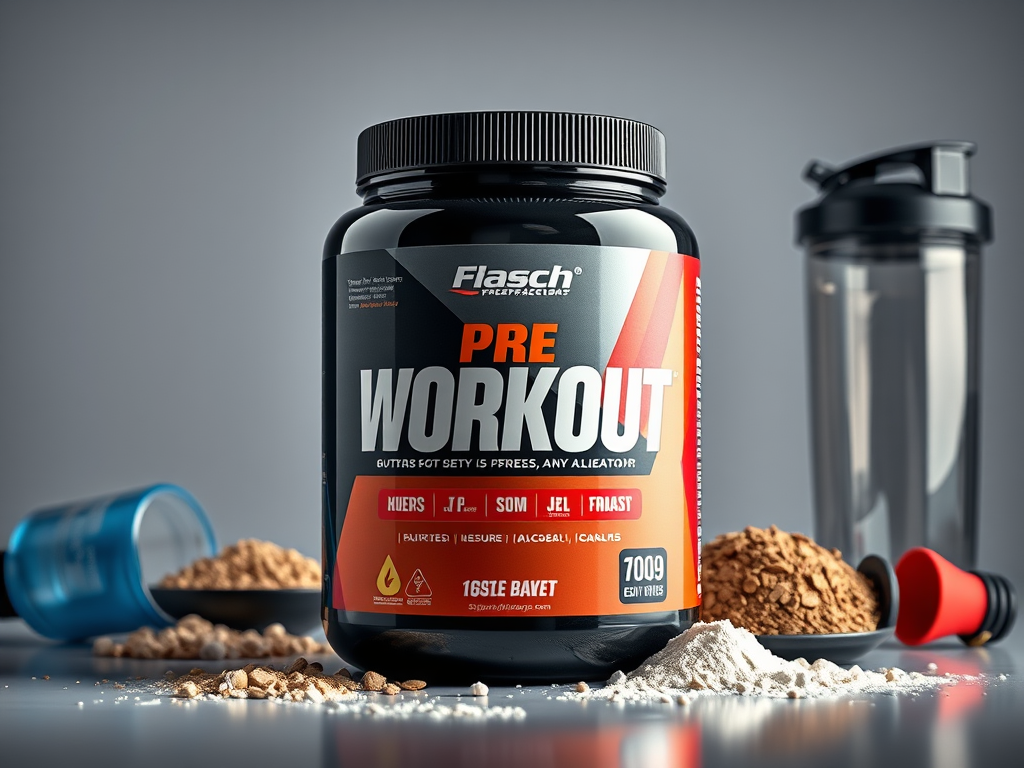
    This is a very common question I get asked and while we know some of the ergogenic properties of certain compounds like caffeine, B-Alanine, Arginine, Creatine etc, what we are starting to see is that they not always be needed in an all in one supplement. Of course people perceive they train better whilst taking a pre-workout and you can’t dismiss the importance of perception on an individual level. However, are they the super potion that everyone thinks they are?

    Multi-ingredient pre-workout supplements (MIPS) have become increasingly popular among athletes and fitness enthusiasts aiming to enhance exercise performance. These supplements typically combine various ingredients such as caffeine, beta-alanine, creatine, amino acids, and nitric oxide precursors, purported to work synergistically to improve various aspects of physical performance. This article delves into recent scientific literature to assess the efficacy and safety of MIPS on exercise performance.

    Potential Benefits of MIPS

    1. Enhanced Anaerobic Performance A study by Beckner et al. (2022) investigated the acute effects of two MIPS formulations—one containing beta-alanine and caffeine (BAC) and another without these ingredients (NBAC)—compared to a placebo (PLA) on anaerobic performance. The findings indicated that both BAC and NBAC supplementation resulted in greater anaerobic power compared to PLA, suggesting that MIPS can enhance anaerobic performance.
    2. Improved Endurance Capacity The same study reported that BAC supplementation improved time to exhaustion during peak oxygen uptake (V̇O₂ peak) tests compared to PLA. This improvement was accompanied by an increase in blood lactate levels, indicating enhanced endurance capacity.
    3. Vascular Function Beckner et al. (2022) also observed that both BAC and NBAC supplementation led to improved brachial artery diameter post-exercise, whereas no significant changes were noted with PLA. This suggests that MIPS may positively influence vascular function, potentially contributing to better nutrient delivery and waste removal during exercise.

    Limitations and Considerations

    1. No Improvement in Upper-Body Resistance Exercise Performance A study by Jung et al. (2020) examined the effects of a MIPS and caffeine alone on upper-body resistance exercise performance, blood flow, blood pressure, and heart rate variability. The results indicated that neither the MIPS nor caffeine alone improved upper-body resistance exercise performance or markers of blood flow relative to placebo, highlighting that the efficacy of MIPS may vary depending on the type of exercise and specific performance metrics assessed.
    2. Safety Implications While MIPS offer potential performance benefits, it is essential to consider safety and individual responses. A brief review highlighted that these supplements are intended to be taken prior to exercise and typically contain a blend of ingredients such as caffeine, creatine, beta-alanine, amino acids, and nitric oxide agents. However, the safety implications and performance outcomes can vary based on the specific formulation and dosage.

    Alternative Pre-Workout Beverages

    For individuals seeking alternatives to MIPS, certain beverages consumed before exercise may offer similar benefits without potential side effects. Some options include:

    Each beverage provides unique benefits, and selecting the right one depends on individual needs and workout intensity. Consulting a healthcare provider is advised for personalized recommendations.

    Conclusion

    Multi-ingredient pre-workout supplements have demonstrated potential in enhancing various aspects of exercise performance, including anaerobic capacity, endurance, and vascular function. However, their efficacy may not extend to all performance metrics, such as upper-body resistance exercise performance. Individual variability and potential side effects necessitate a cautious approach to MIPS usage. Consulting with a healthcare provider can help determine the suitability of these supplements based on personal health status and fitness goals.

    References

    1. pubmed.ncbi.nlm.nih.gov
    2. pubmed.ncbi.nlm.nih.gov
    3. pmc.ncbi.nlm.nih.gov